Search Hardwicke Barristers for:

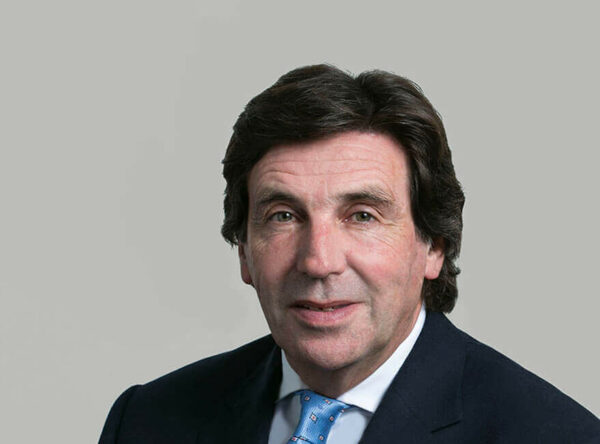
Jamie Clarke

Call:1995

Introduction & Contact Details

Jamie is an established barrister practising within the Insurance division at Hardwicke. His principal areas of practice include professional negligence and liability claims.

Jamie has extensive experience of trials and alternative methods of dispute resolution.
He is regularly instructed to deal with more complex, higher value damages-only claims (particularly to draft Schedules and work with forensic actuarial /accountancy experts), knotty areas of practice (e.g. dissolved Defendants, the impact of compulsory insurance, coverage, substitution of experts/advice on expert evidence) and tactical issues.

Clients value Jamie’s technical and tactical insight, balanced with his accessible and determined approach.

He supports clients at all steps up to the resolution of a claim, and welcomes the opportunity to be involved and provide strategic advice from the outset client’s instruction.

Jamie regularly writes articles and delivers seminars on topics of particular interest to his clients
 
He is instructed on behalf of both Claimants, Defendants and insurers direct. He is licensed for direct public access. He has experience of all types of litigation funding. He welcomes instructions on a conditional fee basis (subject to approval).

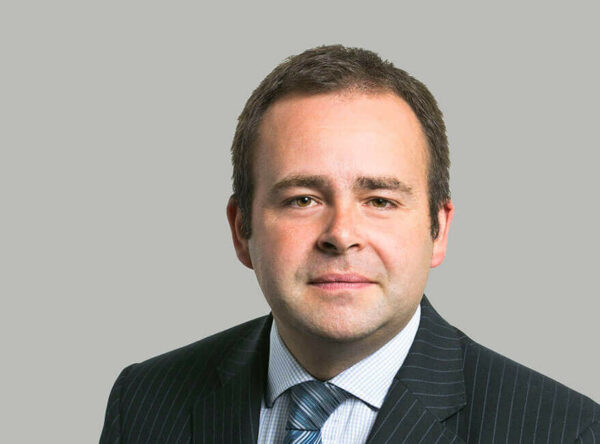
Away from Chambers, Jamie enjoys yacht racing (Contessa 32) and road cycling.

Tel:   020 7242 2523 (switchboard)
Fax:   020 7691 1234
Email: jamie.clarke@hardwicke.co.uk

INSURANCE

Professional Indemnity

From the outset of his practice Jamie has developed expertise in professional negligence claims, principally solicitors and medical professionals.

Recent instructions on behalf of professional indemnity insurers include:

• Advising a panel solicitor with significant exposure in ‘Son of Tag’(AXA Insurance Limited v Akther & Darby Solicitors & Ors), one of The Lawyer’s top 10 cases of 2009, re liability in a claim for breach of contractual duty.
• Numerous claims for negligent handling of so-called ‘coal claims’ by solicitors and barristers, under the DTI’s £1bn compensation scheme for mineworkers suffering occupational diseases such as VWF.
• Ongoing loss of chance claim for nearly £1m in respect of negligent handling by solicitors of an underlying PI claim.
• Jamie has particular experience handling underlying claims:
• settled at an undervalue,
• that have foundered because of:
 a)procedural error (strike out for want of prosecution or automatically under CCR O.17 r.11).
 b)operation of the Limitation Act 1980.

On behalf of Claimants, recent instructions include claims for negligently performed cosmetic surgery and administration of medication (medical malpractice).

Other areas of Jamie’s insurance practice include:

• employers’ liability in particular claims associated with working at height and work equipment.
• including  occupational disease litigation for both employees and employers (and insurers, as well as employers with no insurance cover) across a wide range of injuries and conditions, including HAVS, noise-induced hearing loss, RSI, asbestos exposure, asthma and dermatitis associated with working underground, at ,  power stations for street utilities and factory workers as well as those in a variety of other modern industries. Jamie has handled occupational disease litigation since the start of his practice: in 1996 he was instructed n behalf of British Coal in relation to potential claims by shotfirers.


• motor claims, particularly those giving rise to significant injuries including brain injuries. Clients value his input on technical issues, including issues of compulsory insurance, MIB, accident reconstruction.

• fatal accident claims, in particular the impact of ancillary relief proceedings and state benefits on dependency claims and claims by multiple dependents

Across the spectrum, Jamie has a special interest in:

•Calculating complex loss
•Compulsory liability
•Coverage
•Disclosure of insurance policies / policy documents
•Dissolved parties: Since the advent of the credit crunch and associated business failures, Jamie has advised numerous Claimant advisers and insurers on the implications of dissolution of employers / insured’s for claims and potential claims. In several cases this has involved drafting of documents and contested hearings in county courts and the Commercial Court (QBD), all with favourable outcomes for his clients, Jamie has developed an expertise on this tricky procedural area and presented a paper on the topic of restoring companies to the register at a Hardwicke seminar. Clients will be particularly assisted by a forthcoming seminar on the implementation the Companies Act 2006, and its effect on existing procedures following final implementation on 1 October 2009.
Recent instructions:
• A ballooning accident in which ground crew suffered serious upper limb injuries when a gust of wind lifted the balloon and the Land Rover to which it was tethered. Technical issues included the balloon operators’/employers’ insurance (all risks, PL, EL) and whether the accident occurred during a ‘flight’
• Coverage issues encountered by a captive insurer, related to the issues now being litigated in the EL policy trigger litigation brought by and against insurers Municipal Mutual, Excess, Independent, BAI and Zurich;
• Several widows’ fatal accident claims based on outcome of likely or pending ancillary relief proceedings, multiple Defendants, together with the impact on the claim of contingent Child Support liabilities of the deceased.
• High value claim by a City worker for cost of upgraded flights for himself on business (and with his family on holidays) to accommodate a DVT complication of an injury arising out of an RTA
• Numerous occupational disease claims (see above), many of which focus on limitation, expert evidence on levels of exposure, and apportionment between employers, but can also embrace insurance issues and quantum dispute.
• Claim by a non-dom employee against non-dom employer for accident in the UK, issues included extra-territorial service of proceedings and impact of benefits received pursuant to US workers’ compensation scheme;
• On behalf of the NHSLA several claims brought by care professionals against NHS trusts, mostly involving injuries suffered whilst transferring patients

Marine

Jamie has advised and represented many clients in relation to their litigation arising through marine accidents and insurance claims.

Jamie is an experienced yachtsman, and has had the opportunity to draw on his extensive racing experience advising on accidents suffered during races, most commonly suffered by inexperienced crew – and skippers.

Medical Malpractice

Jamie has gained a large amount of experience in this subject area due to his representation of clients who have experienced road accidents and personal injury. He has knowledge of issues such as hospital procedural failures and public liability.

Product Liability

Jamie accepts instructions for advisory and practical advice in this area and has received commendation from clients for his work.
 
Recent instructions:

• Product liability claim arising out of a failure of a hoist for personal transfers.
• Fatal accident claim by dependents of a motorcyclist killed when the rear wheel became detached at high speed because it had not been replaced in accordance with a safety recall.

PUBLICATIONS & PRESENTATIONS

With his colleagues Jamie presents a useful 1 hour (lunchtime) seminar on the Ogden 6 issues. This seminar is updated to October 2009.

Apart from general seminars on his core practice areas, Jamie also delivers slides and papers (30-60 mins) on:

• Valuation of the loss of chance in professional negligence claims following HAITHWAITE v THOMSON SNELL & PASSMORE [2009] EWHC 647 (QB)
• Complex care claims, in particular the interface between privately funded care regimes and state-funded care (see Crofton below)
• restoration of dissolved companies to the companies register (updated for Companies Act 2006)
• How to deal with substituting an expert (Beck v MOD)
 
In 2007 Jamie made numerous contributions to the buzz in the industry that followed the decision in Crofton v NHSLA [2007] EWCA Civ 71: notably, his article on the topic was published in the Solicitors’ Journal in April 2007, he presented a seminar on the topic to a large audience of clients in chambers in July 2007, and was interviewed for Legal Network TV, with other industry luminaries such as Colin Ettinger of Irwin Mitchell and Graham Dickinson, then of Davies Lavery.

Delegate: ‘The Civil Procedure Rules 10 Years On’, University of Oxford Faculty of Law, 1-2 December 2008

In early 2009 Jamie presented a webinar on the Civil Procedure Rules to an estimated 3000 subscribers with www.cpdwebinars.com/  Jamie will be presenting another CPD webinar in February 2010.

In October 2009, by invitation Jamie presented a paper on care claims for Central Law Training.

Jamie is an advocacy trainer for Gray’s Inn

ARTICLES

Recent (2007-9) keynote articles published in the Solicitors’ Journal are:

• Victims: An update on Crofton (a patient by his father and litigation friend John Crofton) v National Health Service Litigation Authority The Court of Appeal has ruled that claimants have the right to look to defendants to pay for care even where state funding is available. There is no duty to mitigate in these circumstances. However with legislation
and policy hanging in the balance, the future remains uncertain (12/5/09) this article was published in the SJ’s PI Focus supplement

• Work Equipment is Under Control: Spencer-Franks v Kellogg Brown and Root Limited [2008] UK HL 46, overruled the decision of the Court of Appeal in Hammond v Commissioner of Police of the Metropolis [2004] EWCA Civ 830, and widened and restated the scope of the definition of ‘work equipment’ in the Provision and Use of Work Equipment Regulations 1998 (PUWER) (16/9/08)

Fatal accident claims: victory in suicide case The House of Lords ruled that the widow of a man horrifically injured in a workplace accident can claim damages from his employer for his suicide. In Corr v IBC Vehicles [2008] UKHL 13 the Lords ruled that it was reasonably foreseeable that the victim would kill himself as a result of a severe depression following the accident, in which he was almost decapitated.

Calculating Awards: Where it is reasonable for a personal injury claimant to be provided with ongoing care at home, there should be a reduction to reflect the direct financial assistance the claimant will receive from the local authority towards the provision of that care pursuant to s.29 of the National Assistance Act 1948 (and the underlying legislation and Ministerial guidance as also surveyed by Tomlinson J in Freeman v Lockett [2006] EWHC 102 (QB)). This is the so-called ‘no loss’ argument, usually advanced by defendants and their insurers – but this argument was recently revisited in Crofton (a patient by his father and litigation friend John Crofton) v National Health Service Litigation Authority [2007] EWCA Civ 71 (27/2/07)

• Contingency rethink sparks new approach: the impact of the 6th ed. of the Ogden Tables on the calculation of claims for future loss of earnings (12/2/08)

"A SHIFTING DEFINITION" PILJ MARCH 2009, ISSUE 73 : the definition of work equipment in PUWER 1998

Contact the Senior Practice Manager

Name:
Email:
Phone Number:
Message:
 

Core Practice Areas

  • Professional Negligence
  • Employers’ Liability
  • Health & Safety
  • Marine
  • Medical Malpractice
  • Occupier’s Liability
  • Personal Injury
  • Product Liability
  • Professional Indemnity
  • Public Liability
  • Road Traffic
  • Inquiries & Inquests

Contact the Senior Practice Manager

Qualifications

  • MA (Oxon)


Professional Associations

  • London Common Law and Commercial Bar Association
  • Personal Injuries Bar Association
  • Professional Negligence Bar Association